2026 Supplement Trends: What's Growing, What's Shifting, and How to Formulate for It
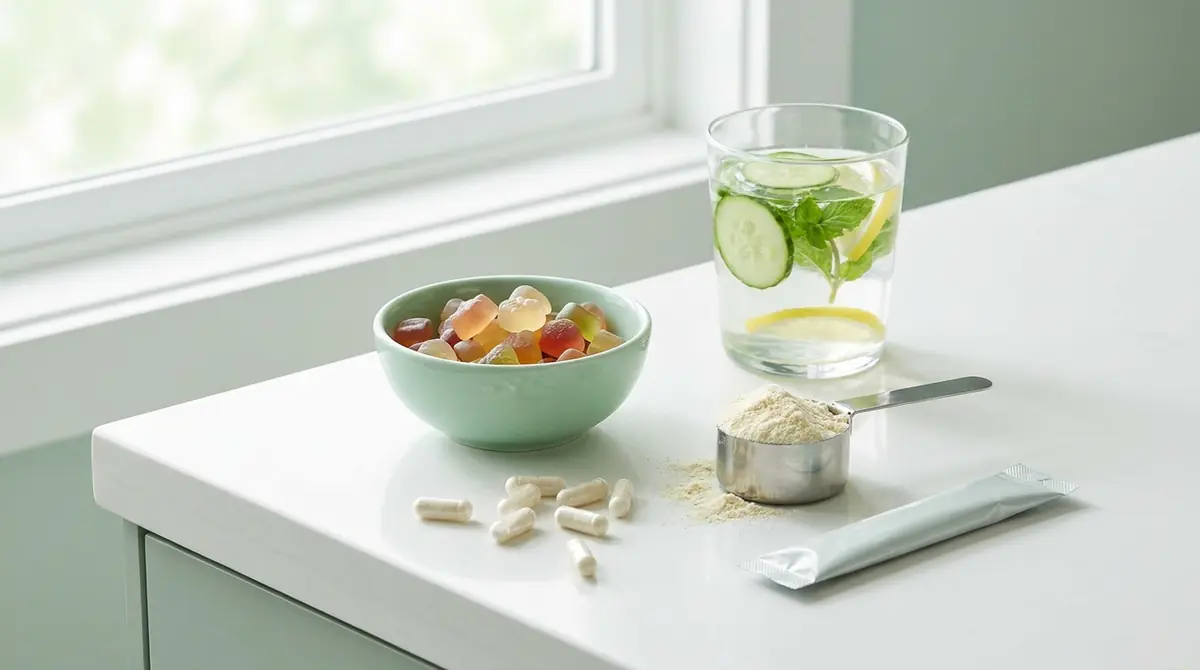
If you’re planning SKUs for the back half of 2026, the market has moved. Consumers ask why that dose, what’s the source, and does the label match the COA. The 2026 industry trend reports point in a similar direction: targeted wellness, clean labels, and category consolidation.
Here’s how we’re reading those signals at Nutricraft Labs, and what it means if you’re formulating a new product for the Canadian or US market.
The three shifts shaping 2026
Across the reports, three themes keep surfacing:
- From general wellness to targeted outcomes. Buyers want a product for one job: sleep onset, GLP-1 support, women’s hormonal phases, or cognitive endurance, rather than a generic multi.
- Clean-label as table stakes. Minimal excipients, recognizable ingredients, and third-party testing are increasingly expected, not premium.
- Category consolidation. Fewer, deeper categories are absorbing attention. Winners in each category tend to be brands with a clear ingredient story and dosing rationale.
Reddit threads in r/Supplements and r/Nootropics reinforce this. Consumers are pulling up studies, comparing extract ratios, and calling out proprietary blends. If your label can’t defend itself in a comment thread, it probably can’t defend itself in a retail buyer meeting either.
Categories worth a serious look
The trend reports flag a lot of ground. A few areas stand out for private-label brands with a 1,000-unit MOQ mindset, where you can test without betting the company:
- Sleep and stress stacks. Magnesium glycinate, L-theanine, glycine, and apigenin appear repeatedly. The formulation challenge is dose, not novelty.
- GLP-1 companion products. As GLP-1 medications go mainstream, adjacent supplements — protein adequacy, fiber, electrolytes, muscle preservation — are a growth lane. Structure-function only; no weight-loss disease claims.
- Women’s health across life stages. Cycle support, perimenopause, and postpartum are moving from niche to mainstream shelf space.
- Longevity and cellular health. Creatine (yes, still), taurine, urolithin A, spermidine, and NAD precursors keep showing up in the 2026 outlooks.
- Functional beverages with a job to do. Hydration+, focus drinks, gut-shot formats. Beverage is a different manufacturing conversation than capsules — plan the format decision early.
- Gut and metabolic health. Targeted probiotics with strain-level claims, prebiotic fibers, and postbiotics.
The common thread: a concept that slots into a category with real search demand and a defensible ingredient story is a much easier launch.
Formulating for the 2026 buyer
A few principles we walk clients through when a concept lands on our desk.
Start with the dose, not the ingredient list. A trendy ingredient at a sub-clinical dose is worse than a boring ingredient at an effective one. Buyers screenshot supplement facts panels now. If your ashwagandha is 125 mg when the studies use 600 mg, expect to be called on it.
Fewer ingredients, better sourced. A 4-ingredient formula with standardized extracts and named-source ingredients (with COAs) reads more credible than a 22-ingredient kitchen-sink blend. It also costs less to test and manufacture.
Design the label for two markets from day one. If you might sell in Canada and the US, structure the formula so a single SKU can carry a bilingual Canadian label with an NPN and a US Supplement Facts panel. Retrofitting later is expensive.
Pick the format your consumer actually uses. Capsules are cheap and shelf-stable. Gummies convert well but have dose ceilings and stability considerations. Stick packs and functional beverages are premium-feeling but add complexity. Format is a business decision, not just a marketing one.
What NPN and FDA compliance actually require
This is where a lot of first-time founders underestimate the timeline. A quick orientation:
Canada (NPN via Health Canada’s NNHPD):
- Every natural health product needs a Natural Product Number before it can be sold.
- Ingredients, doses, and claims must map to Health Canada’s monographs — or you file a non-monograph submission, which takes longer.
- Labels must be bilingual (English and French) and follow specific format rules.
- Claims are structure-function only. “Helps support” and “is a source of” language, not disease claims.
United States (FDA / DSHEA):
- Dietary supplements don’t get pre-approval, but the facility must be FDA-registered and cGMP-compliant.
- New Dietary Ingredient (NDI) notifications apply to ingredients not marketed in the US before 1994.
- Structure-function claims require the standard DSHEA disclaimer.
- Labels follow 21 CFR 101.36 for Supplement Facts.
Practically, this means your formula, your claims, and your label all need to be built together. We’ve seen brands finalize artwork before the NPN comes back, then reprint because a claim got rejected. Sequence matters.
A realistic 2026 launch timeline
Rough shape for a new SKU going into both markets:
- Weeks 1–3: Concept, formulation, ingredient sourcing, costing.
- Weeks 3–6: Label design, claims review, NPN submission prep.
- Weeks 6–20+: NPN review (variable; monograph submissions are faster than non-monograph).
- In parallel: US label finalization, manufacturing scheduling, COA and stability planning.
- Post-approval: Production run, finished-product testing, shipping.
At 1,000-unit MOQs, you can launch a category test without a warehouse full of inventory. Test the concept, watch sell-through, then scale the winners.
Where to start if you’re planning a 2026 launch
A short checklist before you commit:
- Pick the category, then the ingredient. Don’t fall in love with an ingredient looking for a home.
- Write the label copy first. If you can’t describe the product in compliant, structure-function language, the formulation probably needs to change.
- Confirm the dose is defensible. Match study doses where possible.
- Plan for both markets if it’s plausible. Bilingual Canadian labels and US Supplement Facts panels can co-exist on one SKU with the right planning.
- Get one point of contact for formulation, regulatory, and manufacturing. Juggling separate vendors is where launches slip.
2026 rewards brands that are specific. Specific consumer, specific outcome, specific dose, specific sourcing. The trend reports agree on that much. The formulation and compliance work is what turns a trend into a shelf-ready SKU.
If you’re weighing a concept and want a second read on category fit or NPN feasibility, that’s the kind of conversation we have every week. Request a consultation and we’ll walk through yours.
Ready to Start Your Supplement Brand?
Let's discuss how we can help bring your vision to life with our comprehensive manufacturing services.
Related Articles
2026 Private Label & Contract Manufacturing Shifts: Low MOQ, GMP, and Speed to Market
How supplement founders can balance low MOQs, GMP certification, and faster launches in 2026's shifting contract manufacturing landscape.
Read more →The 2026 Private Label Playbook: Low MOQ, Fast Turnaround, and Regulatory Navigation
A practical 2026 roadmap for first-time supplement founders: low MOQ private label, NPN and FDA compliance, and one point of contact from formula to shelf.
Read more →How Much Does It Cost to Launch a Supplement Brand in Canada?
What it actually costs to launch a supplement brand in Canada: $8,000-$12,000 for white label, $15,000-$25,000 for a custom formula, with a full breakdown.
Read more →