How to Tell If Your Supplements Are Fake: A Manufacturer's Guide to Quality Verification
In September 2024, Amazon made an announcement that sent shockwaves through the supplement industry. At their annual Accelerate seller conference in Seattle, they revealed they’re shutting down their “commingling” program by mid-2026.
The room erupted in applause. It was louder than any other update of the morning, according to reports. Sellers had been complaining for years. Brands had been warning customers. The problem had become impossible to ignore.
Here’s what commingling was: Amazon would pool “identical” products from multiple sellers into the same warehouse bin. If you ordered a bottle of vitamin D from Brand X’s official store, you might receive a bottle from any seller who claimed to be selling Brand X vitamin D, including counterfeiters.
Even if you bought directly from the brand’s Amazon storefront, you could get a fake.
Think about that. You did your research. Found a reputable brand. Clicked their official store. Paid premium prices. And received a counterfeit product anyway because Amazon mixed the real ones with fakes in their warehouse.
This wasn’t a minor glitch. This was systematic enabling of counterfeit distribution at scale.
But here’s the uncomfortable truth: Amazon wasn’t unique. They were just the most visible. The supplement counterfeit problem runs deeper than one e-commerce platform’s inventory policy.
As someone who’s spent years in supplement manufacturing, I’ve watched the counterfeit crisis unfold from the inside. I’ve seen the testing data. I’ve heard the stories from brand owners who spent millions building legitimate products only to find cheap knockoffs destroying their reputation. I’ve talked to consumers who thought they were taking high-quality supplements when they were actually swallowing who-knows-what.
Amazon ending commingling is progress. But it doesn’t solve the underlying problem: most consumers have no idea how to verify if a supplement is real or fake.
Let me show you what manufacturers know that consumers don’t.
The Scale of the Problem: How Bad Is It Really?
Before we dive into how to spot fakes, you need to understand the scope of what we’re dealing with. This isn’t paranoia. This is documented, peer-reviewed reality.
The Contamination Data
Research analyzing 121 supplement products found alarming contamination rates:
- 5% exceeded safe daily limits for arsenic
- 2% had excess lead, cadmium, and aluminum
- 1% contained too much mercury
These aren’t trace amounts we’re talking about. These are levels high enough to pose real health risks, including cognitive impairment, brittle bones, dementia, and even cancer over time.
Another study on prenatal vitamins (products specifically designed for pregnancy) found that 11 of 12 prenatal multivitamins had at least one tested nutrient outside the acceptable deviation from what the label claimed.
Folic acid, iodine, iron, vitamins A, C, and E (all critical for fetal development) were either under-dosed or over-dosed compared to label claims.
Research on herbal supplements found that 16 of 40 supplements tested contained pesticide residues that appeared to exceed legal limits.
This is what happens when quality control fails. Or when products are counterfeit. Or when manufacturers cut corners to increase profit margins.
The Mislabeling Crisis
But contamination is only part of the story. Sometimes the problem isn’t what’s in the product. It’s what isn’t.
Studies using DNA sequencing have found supplements claiming to contain specific herbs that actually contained completely different plants. In some cases, expensive herbs were replaced with cheap fillers. In others, the active ingredient was missing entirely.
One particularly disturbing case involved a dietary supplement contaminated with Rhizopus oryzae (a mold species) that was directly linked to a patient’s infection through DNA matching of tissue samples.
This is what we’re up against. Not just ineffective products, but potentially dangerous ones.
What Amazon’s Commingling Actually Did
Let’s get specific about how Amazon’s now-discontinued policy created the perfect storm for counterfeit distribution.
How Commingling Worked
When legitimate brands sent their products to Amazon’s fulfillment centers, those products went into a shared inventory bin with any other product Amazon’s system identified as “identical.”
The criteria for “identical” was shockingly simple: same UPC code, same description.
Counterfeiters figured out the game immediately. They’d create knockoff products, slap on matching UPC codes, send them to Amazon, and boom. Their fakes were now mingling with genuine products in the warehouse.
When you ordered, Amazon’s system just grabbed whatever bottle was closest. Could be real. Could be fake. You had no way to know.
Why It Took So Long to End
Amazon defended commingling for years as an “efficiency measure.” By pooling identical products, they could:
- Reduce warehouse space requirements
- Speed up fulfillment times
- Simplify inventory tracking
But here’s what they didn’t emphasize: it also made accountability impossible.
When a customer received a counterfeit product, whose fault was it? The legitimate brand whose inventory bin was compromised? The counterfeit seller who contributed the fake? Amazon, who mixed them together?
The answer was: nobody knew. And when nobody’s accountable, nothing changes.
It took years of seller complaints, brand lawsuits, and public pressure before Amazon finally announced the phase-out. Even then, they’re taking until mid-2026 to fully implement it.
The Problem Doesn’t End With Amazon
Even with commingling ending, the counterfeit problem persists because:
- Other platforms still exist - Walmart Marketplace, eBay, third-party storefronts
- Direct-to-consumer fakes - Counterfeit websites mimicking legitimate brands
- Retail infiltration - Fake products sometimes make it into brick-and-mortar stores
- Grey market distribution - Expired or diverted products sold through unauthorized channels
This is why understanding verification methods matters. You can’t just assume buying from “big platforms” keeps you safe.
Understanding Third-Party Testing: What Those Seals Actually Mean
Walk down any supplement aisle and you’ll see various certification seals. USP. NSF. ConsumerLab. Informed Choice. What do they actually mean?

Let me break down the major players.
USP (United States Pharmacopeia)
USP is arguably the gold standard. They’re a nonprofit that sets widely accepted standards for both pharmaceuticals and supplements.
USP tests four critical areas:
- Identity – Does the product contain the correct ingredient?
- Strength – Is the dosage accurate to label claims?
- Purity – Are contaminants absent (heavy metals, microbes, toxins)?
- Dissolution – Does the supplement break down properly in your body?
When you see the USP Verified mark, it means the product passed all four tests. It also means the manufacturer’s facility was audited for GMP compliance and quality systems.
Important limitation: USP doesn’t test for banned athletic substances. If you’re a competitive athlete, this isn’t enough.
NSF International
NSF offers two main certifications relevant to supplements:
NSF Certified for Sport – This one tests for over 270 banned athletic substances. If you’re subject to drug testing (college athletes, professionals, etc.), this is what you want.
NSF Contents Tested and Certified – This verifies what’s on the label is actually in the product and confirms it’s free from contaminants.
NSF is the only independent, third-party organization that offers true ongoing testing. They don’t just analyze a single sample and approve it forever. They conduct unannounced facility inspections and test products purchased off retail shelves, not just samples manufacturers submit.
This makes NSF certification particularly trustworthy because manufacturers can’t just clean up for inspection day and then let standards slip.
ConsumerLab
ConsumerLab is a bit different. They’re a for-profit company that independently purchases and tests supplements, then publishes the results.
They don’t offer a certification seal that manufacturers can apply for (though there is a “CL Seal of Approved Quality” for brands that voluntarily submit products). Instead, they’re more like watchdogs, testing products and reporting which ones pass or fail their standards.
Their website offers a subscription service where you can look up specific supplements and see test results. It’s useful for consumers, though the subscription cost ($40-50/year) is a barrier.
What Third-Party Testing Doesn’t Mean
Here’s what many consumers misunderstand: these certifications are voluntary and costly.
A supplement can be high-quality, properly manufactured, and contain exactly what it claims and still not have third-party certification, simply because the manufacturer hasn’t paid for the testing and audit process.
Lack of certification doesn’t automatically mean a supplement is bad. But presence of legitimate certification is a strong signal that the manufacturer has invested in quality verification.
GMP Certification: What It Is and Why It Matters
Let’s talk about Current Good Manufacturing Practice (cGMP), which is actually required by law in the United States. Unlike third-party certifications, cGMP is mandatory, not voluntary.
What cGMP Requires
In 2007, the FDA finalized regulations (21 CFR Part 111) establishing cGMP standards for dietary supplements.
These regulations mandate minimum standards for:
- Manufacturing processes – Equipment, sanitation, controls
- Quality control procedures – Testing protocols, specification verification
- Record keeping – Documentation of all processes and testing
- Personnel qualifications – Training requirements for staff
- Complaint handling – Systems to track and investigate issues
Critically, cGMP requires manufacturers to:
- Test incoming raw materials to verify identity, purity, strength, and composition
- Establish specifications for what acceptable ingredients look like
- Conduct in-process testing to ensure manufacturing goes according to plan
- Perform finished product testing to confirm the final supplement meets all specifications
- Maintain Certificates of Analysis documenting all test results
What GMP Certification Actually Tells You
When a facility is “GMP-certified,” it means they’ve been audited by a certifying body (not the FDA directly, as the FDA does inspections but doesn’t issue certification) and found to comply with FDA’s cGMP requirements.
Third-party GMP certifications come from organizations like NSF, UL, or private auditing firms.
Here’s the tricky part: GMP certification applies to the facility, not individual products.
A GMP-certified facility can produce high-quality supplements. But they could also produce poor-quality ones if they’re not following their own procedures, cutting corners, or working with substandard ingredients.
GMP certification is table stakes. It’s the minimum standard you should expect, but it’s not a guarantee of quality by itself.
FDA Registration vs. FDA Approval
Let me clear up a common source of confusion.
You’ll see supplements marketed as “FDA-registered facility” or “made in an FDA-registered facility.” This sounds impressive. What does it mean?
Manufacturers must register their facilities with the FDA. This is required by law. It’s not an achievement; it’s regulatory compliance.
The FDA does not approve dietary supplements before they go to market. Unlike drugs, supplements don’t require FDA approval. The FDA can take action against supplements after they’re on the market if they’re found to be unsafe or mislabeled, but there’s no pre-market approval process.
So when you see “FDA-registered,” understand what that means: the facility told the FDA it exists. That’s it.
At Nutricraft Labs, we’re both FDA-registered and GMP-certified by third-party auditors. But we don’t lead with “FDA-approved” because supplements aren’t approved by FDA. That’s actually a red flag. If a supplement claims FDA approval, they’re either confused or lying.
How to Read a Certificate of Analysis (COA)
Certificates of Analysis are your window into what testing was actually done on a product. But most consumers have never seen one, let alone know how to interpret it.
What a COA Should Include
According to FDA requirements, a legitimate COA must contain:
- Batch/Lot number – The specific batch tested
- Product identification – Name and description
- Test methods – Which analytical procedures were used (HPLC, mass spec, etc.)
- Specifications/limits – What the acceptable range is for each parameter
- Actual results – What the test found
- Pass/fail determination – Whether results met specifications
- Testing date – When the analysis was performed
- Laboratory information – Who conducted the testing
A complete COA shows both potency testing (does it contain what the label claims?) and safety testing (is it free from contaminants?).
How to Verify Your Product Matches the COA
Here’s the critical step most people miss: you need to verify the COA matches your actual product.
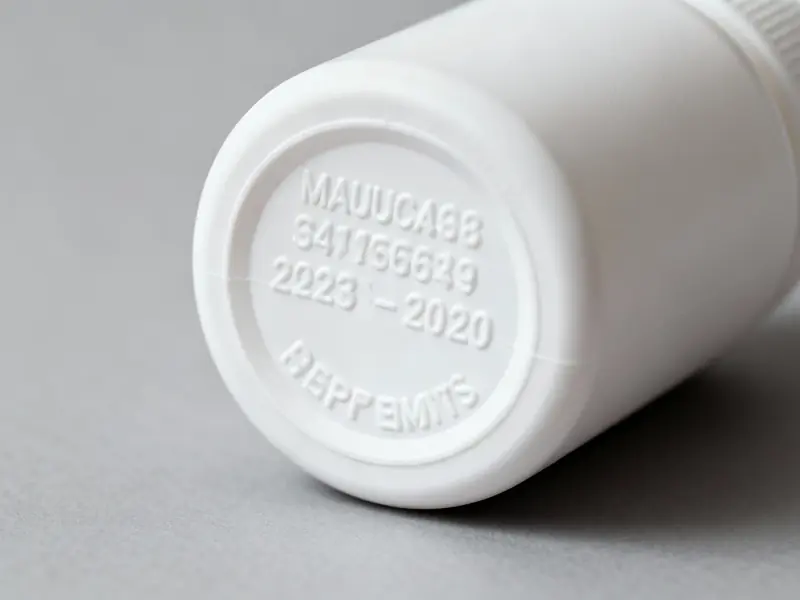
- Find your product’s batch/lot number – Usually printed on the bottom or side of the bottle
- Request the COA for that specific batch – Many brands have them available on their website or will email them
- Match the lot number – Confirm the COA lot number matches your bottle exactly
- Check the test date – Should be relatively recent, not years old
If a brand shows you a COA but it’s for a different batch number than what you have, that COA is irrelevant to your product. Each batch needs its own testing.
Red Flags in COAs
Watch out for:
- Generic COAs – Not tied to specific batch numbers
- Missing test methods – How can you trust results if you don’t know how they were measured?
- Suspiciously perfect numbers – Real testing has variation; results that are exactly at target every time raise questions
- No safety testing – Potency without purity testing is incomplete
- Outdated results – COAs from years ago don’t tell you about today’s product
- Missing testing lab information – Who performed the tests? Can it be verified?
What Good Looks Like
A reputable manufacturer will:
- Post COAs publicly on their website with a searchable database by lot number
- Include both potency and safety panels (heavy metals, microbes, contaminants)
- Use recognized testing labs (not just internal testing)
- Update COAs for each new batch
- Make requesting COAs easy (not defensive when customers ask)
This level of transparency costs money. It requires infrastructure. It slows down production. But it’s what quality manufacturers do.
Red Flags: How to Spot Fake or Low-Quality Supplements
Let’s get practical. What should trigger your skepticism?
Label Red Flags
Proprietary blends – When ingredients are listed as part of a “proprietary blend” without individual amounts, you can’t verify if therapeutic doses are included. This format allows manufacturers to sprinkle in trace amounts of expensive ingredients while hiding that most of the blend is cheap filler.
Unrealistic claims – “Cures diabetes,” “Melts fat without exercise,” “Reverses aging.” If it sounds too good to be true, it is. Supplements can support health, but they’re not miracle drugs. Claiming to cure diseases is actually illegal for supplements.
No contact information – Legitimate manufacturers list addresses, phone numbers, and websites. If you can’t find any way to contact them, that’s a red flag.
Misspellings and poor grammar – Professional manufacturers proofread their labels. Errors suggest lack of attention to detail, or outright fraud.
Too many active ingredients – A supplement claiming to contain 50+ herbs and nutrients is likely under-dosing everything. Effective formulation requires therapeutic doses, and there’s only so much that fits in a capsule or tablet.
No batch/lot number – Every legitimate product has a batch code for traceability. No batch number means no way to track manufacturing or pull products if problems arise.
Packaging Red Flags
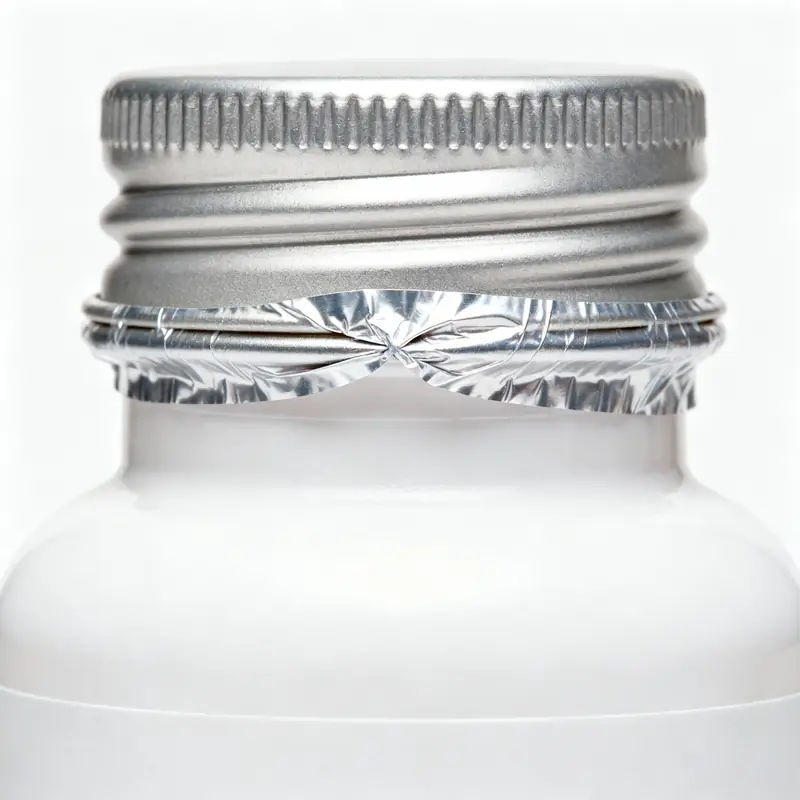
Tamper-evident seals missing or broken – Every supplement should have a seal. If it’s missing or already broken when you receive it, don’t consume it.
Poor print quality – Smudged text, misaligned labels, or low-resolution graphics suggest counterfeit products trying to mimic professional packaging on the cheap.
Expiration date missing – Supplements degrade over time. No expiration date suggests the manufacturer either doesn’t know the product’s shelf life (bad) or doesn’t care (worse).
Incorrect bottle size – If the label says 120 capsules but the bottle feels half-empty or suspiciously full, something’s wrong.
Price Red Flags
Too cheap – Quality ingredients cost money. If a supplement is significantly cheaper than competitors claiming the same formulation, ask why. Often it’s because:
- They’re using inferior ingredient forms (oxide instead of chelated minerals)
- They’re under-dosing active ingredients
- It’s counterfeit
No manufacturer information – Who made this? Where? If you can’t find information about the actual manufacturer (not just the brand name), proceed with extreme caution.
Source Red Flags
Third-party marketplaces only – If a brand sells exclusively through Amazon/eBay/Walmart Marketplace and has no direct website or authorized retailers, that’s suspicious.
No authorized retailer list – Legitimate brands know who they’ve authorized to sell their products and often publish this information.
Suspiciously new seller accounts – On marketplace platforms, check seller ratings and history. Brand new accounts selling popular supplements at low prices are often counterfeiters.
Where to Actually Buy Supplements (And Where Not To)
Location matters.
Safest Options
1. Direct from manufacturer’s website
This is generally the safest option. You’re buying directly from the source, eliminating intermediaries where counterfeits can enter the supply chain.
Look for:
- Secure checkout (HTTPS)
- Professional website with company information
- Direct customer service contact
- Batch-specific COAs available
2. Authorized retailer lists
Many reputable brands publish lists of authorized brick-and-mortar and online retailers. If you’re buying from somewhere not on that list, you’re in grey-market territory.
3. Verified brand storefronts
If buying from a marketplace, go to the brand’s verified storefront (if they have one) rather than third-party sellers. This doesn’t eliminate all risk (thanks to historical commingling), but it reduces it.
4. Professional healthcare practitioners
Some supplement lines are only available through healthcare practitioners (doctors, naturopaths, registered dietitians). These “practitioner brands” often have stricter quality control and distribution limitations that reduce counterfeit risk.
Higher-Risk Options
Marketplace third-party sellers – Even with commingling ending, buying from random third-party sellers on Amazon carries risk. Check seller ratings, but understand that sophisticated counterfeit operations can have decent ratings too.
Unfamiliar websites – That website offering 50% off popular brands you found through a Google ad? Probably too good to be true. Stick to known retailers or the brand’s actual website.
Social media ads – Supplement scams are rampant in social media advertising. Those ads promising miraculous results are often selling untested, unregulated, or outright fake products.
Discount/liquidation sites – Supplements sold through discount liquidation channels are often expired, improperly stored (heat degrades supplements), or diverted grey-market products.
Geographic Considerations
If you’re buying imported supplements, understand that quality standards vary dramatically by country. The FDA’s cGMP regulations apply to products sold in the US market, but products manufactured for other markets may not meet these standards.
Some countries have excellent regulatory oversight (Canada, EU countries, Australia). Others have minimal standards or poor enforcement.
Inside Manufacturing: How Quality Actually Happens
Let me pull back the curtain on what happens at a quality supplement manufacturer like Nutricraft Labs.
Raw Material Verification

Before a single capsule gets filled, we test every raw material that comes in:
Identity testing – Is this actually vitamin C, or did someone mislabel something else? We use techniques like HPLC (high-performance liquid chromatography) or FTIR (Fourier transform infrared spectroscopy) to confirm molecular identity.
Potency testing – How much of the active ingredient is present? If we ordered 500kg of vitamin D3 with 100,000 IU/g potency, does it actually contain that?
Purity testing – What contaminants are present? Heavy metals (lead, mercury, arsenic, cadmium), microbes (bacteria, mold, yeast), pesticides, solvents?
Physical testing – Does it look right? Right color, texture, particle size? Experienced technicians can often spot problems visually before lab results come back.
If a raw material fails any test, it’s rejected. We don’t “blend it down” with good material to meet specs. It gets returned to the supplier or destroyed.
In-Process Controls
During manufacturing, we’re constantly monitoring:
- Equipment calibration (are our scales accurate?)
- Environmental conditions (temperature, humidity)
- Blend uniformity (is the active ingredient evenly distributed?)
- Fill weight accuracy (does each capsule contain the right amount?)
- Capsule integrity (no defects, proper sealing)
If something goes off-specification mid-batch, we stop, identify the problem, fix it, and document everything.
Finished Product Testing
Before any batch ships, we test the finished product:
- Label claim verification – Does it contain what we say it does?
- Dissolution testing – Does it break apart in conditions mimicking digestion?
- Microbial testing – Is it free from harmful bacteria?
- Heavy metals – Below regulatory limits?
- Stability – Will it maintain potency through its expiration date?
Each batch gets a unique lot number. We keep samples from every batch in our stability program (bottles stored at various temperatures) while we periodically test them to confirm the product maintains quality over time.
Why This Matters to You
This level of testing isn’t free. It adds time and cost. When you see supplements at rock-bottom prices, ask yourself: did they do all this testing, or did they skip it?
When you buy from a GMP-certified, quality-focused manufacturer, you’re paying for this infrastructure. The testing. The documentation. The rejected batches that didn’t meet specs. The stability programs running in the background.
It’s not about marketing hype. It’s about the unsexy work of quality control that happens behind the scenes.
Your Supplement Verification Checklist
Here’s your practical guide to vetting any supplement before you buy:
Before Purchase
- Check for third-party certification (USP, NSF, ConsumerLab)
- Verify the manufacturer has an actual website with contact information
- Look for published COAs (bonus points if searchable by batch)
- Check if the brand publishes an authorized retailer list
- Read the ingredient list for proprietary blends (red flag) or clearly listed amounts (good)
- Verify ingredient forms (chelated minerals, bioavailable compounds)
- Check the price against competitors (if it’s too cheap, that’s suspicious)
- Read recent reviews for reports of quality issues
Upon Receipt
- Check tamper-evident seal is intact
- Verify batch/lot number is present and legible
- Confirm expiration date is present and far enough in future (at least 12-18 months for most supplements)
- Compare packaging to brand’s official product photos
- Request COA for your specific batch number
- Verify COA batch matches your bottle
Red Flags to Reject
- Broken or missing seal
- No batch number
- Expired or expiring soon (within 6 months)
- Packaging doesn’t match official photos
- Can’t obtain COA for your batch
- Product smells or looks wrong (rancid oil, discolored pills, etc.)
If You Suspect Counterfeit
- Don’t consume it – Not worth the risk
- Contact the brand directly – Report it and provide batch number, photos, where you purchased
- Report to FDA – They maintain a Safety Reporting Portal
- Report to the platform – If bought through Amazon/etc., file a complaint
- Warn others – Leave a review (with photos if possible)
The Bottom Line: Trust, But Verify
Amazon ending commingling by 2026 is a step forward. But it doesn’t eliminate the counterfeit problem. It just reduces one vector.
The supplement industry has a trust problem, and for good reason. Studies show contamination, mislabeling, and quality issues are real and widespread. Counterfeiters are sophisticated and opportunistic.
But here’s what I want you to take away from this article: You’re not helpless.
You can verify quality. You can spot red flags. You can make informed decisions about where to buy and which brands to trust.
Look for third-party certifications. Request COAs. Buy from authorized sources. Do the five-minute verification process before consuming a new supplement.
As a contract manufacturer, we think about this every day at Nutricraft Labs. We know the testing that goes into a quality supplement. We know the documentation trail. We know what cutting corners looks like, and we know what doing it right costs.
When we formulate private label supplements for our clients, we’re not just filling capsules. We’re building products that can stand up to scrutiny. Products backed by testing. Products with COAs that tell the truth.
Because in the end, your trust is the only thing that matters. And trust requires proof.
The next time you pick up a supplement bottle, don’t just read the marketing claims. Look for the batch number. Request the COA. Check the certifications. Verify the source.
Your health deserves supplements that are exactly what they claim to be: nothing more, nothing less, and definitely nothing dangerous.
Related Reading
Want to learn more about supplement quality and manufacturing?
- Why the Form of Your Supplement Matters More Than the Ingredient – Understanding dosage forms and bioavailability
- How to Choose the Right Dosage Form for Your Supplement – Matching delivery systems to ingredients
- Private Label Manufacturing – How Nutricraft Labs ensures quality from formulation to finished product
Frequently Asked Questions
Is it safe to buy supplements on Amazon after they end commingling?
It’s safer than it was, but not risk-free. Even with dedicated inventory, you’ll still need to verify you’re buying from authorized sellers (preferably the brand’s own storefront). Third-party sellers can still sell counterfeits; the difference is they’ll be accountable for the specific unit you receive rather than it being mixed in a shared bin. Always check seller ratings, buy from verified storefronts when possible, and verify your product with batch-specific COAs.
What’s the difference between USP and NSF certification?
USP focuses on four core areas: identity, strength, purity, and dissolution. It’s the gold standard for general supplement quality. NSF offers two relevant certifications: “NSF Certified for Sport” (tests for 270+ banned athletic substances) and “NSF Contents Tested and Certified” (similar to USP but with ongoing surveillance testing). For most consumers, USP is sufficient. For athletes subject to drug testing, NSF Certified for Sport is essential.
Can supplements without third-party certification still be high quality?
Yes. Third-party certification is expensive and voluntary. Some small manufacturers produce excellent products but haven’t invested in USP or NSF certification. However, they should still have COAs available, follow cGMP standards, and be transparent about testing. The absence of certification isn’t automatically a red flag, but it means you need to do more verification work yourself.
How do I know if a Certificate of Analysis is legitimate?
Check that the COA includes: specific batch/lot number, test methods used, testing laboratory information, both potency and safety testing, and a recent test date. The COA should be for your exact batch. Verify the lot number on your bottle matches the COA. Be suspicious of generic COAs with no batch numbers, missing test methods, or results that are always exactly perfect (real testing has variation).
What does “FDA-registered facility” actually mean?
It means the facility has registered with the FDA as required by law. Basically, they told the FDA they exist. It’s regulatory compliance, not an achievement. The FDA does not approve dietary supplements before they go to market (unlike drugs). If a supplement claims to be “FDA-approved,” that’s a red flag. Supplements aren’t FDA-approved. Look instead for GMP certification and third-party testing.
Are supplements from practitioner-only brands better quality?
Often, but not always. Practitioner brands (sold through doctors, naturopaths, etc.) typically have stricter quality control and more limited distribution, which reduces counterfeit risk. They’re also formulated with therapeutic dosing rather than marketing appeal. However, some direct-to-consumer brands also maintain excellent quality standards. The practitioner channel adds a layer of vetting, but you should still verify quality markers (certifications, COAs, testing).
What should I do if I think I received a counterfeit supplement?
Don’t consume it. Take photos of the packaging, batch number, and product. Contact the brand directly with this information and where you purchased it. Report it to the FDA through their Safety Reporting Portal. If purchased through an online marketplace, file a complaint with the platform. Leave a review warning others (with photos). If you’ve already consumed some and experience adverse effects, seek medical attention and report it as an adverse event to FDA.
How can I verify a supplement’s batch number matches the COA?
Find your product’s batch or lot number (usually printed on the bottom or side of the bottle). Visit the brand’s website and look for a COA database or contact customer service requesting the COA for that specific batch. Compare the batch number on the COA to your bottle. They must match exactly. If the brand won’t provide a batch-specific COA or only offers generic ones, that’s a red flag.
Are supplements from other countries less safe than US-made supplements?
It depends on the country. Canada, EU countries, Australia, and New Zealand have robust regulatory standards comparable to or exceeding US requirements. However, some countries have minimal oversight or poor enforcement. If buying imported supplements, research that country’s regulatory standards. Also verify the product meets US cGMP requirements if it’s being sold in the US market.
What’s the shelf life of supplements, and does it matter?
Most supplements have a 2-3 year shelf life from manufacture date if stored properly (cool, dry, away from light). However, potency degrades over time. Some nutrients degrade faster than others. Probiotics, fish oil, and some vitamins are particularly sensitive. Look for products with at least 12-18 months before expiration when purchasing. Proper storage matters: heat, humidity, and light accelerate degradation. Supplements sold through discount/liquidation channels are often near expiration or improperly stored.
Ready to Start Your Supplement Brand?
Let's discuss how we can help bring your vision to life with our comprehensive manufacturing services.
Related Articles
2026 Private Label & Contract Manufacturing Shifts: Low MOQ, GMP, and Speed to Market
How supplement founders can balance low MOQs, GMP certification, and faster launches in 2026's shifting contract manufacturing landscape.
Read more →The 2026 Private Label Playbook: Low MOQ, Fast Turnaround, and Regulatory Navigation
A practical 2026 roadmap for first-time supplement founders: low MOQ private label, NPN and FDA compliance, and one point of contact from formula to shelf.
Read more →How Much Does It Cost to Launch a Supplement Brand in Canada?
What it actually costs to launch a supplement brand in Canada: $8,000-$12,000 for white label, $15,000-$25,000 for a custom formula, with a full breakdown.
Read more →